Working with Claude, I turned an organization's biggest administrative bottleneck into a tool that saves nearly six hundred thousand euros. This is the problem, the build, the numbers, and what transfers to any organization.
An organization decided to bring a field operation in-house instead of outsourcing it. The financial logic was sound. But one cost was hiding in the paperwork.
Every single job required permits from local authorities. Across the territory, 24 different administrations each had their own rules: separate forms, separate platforms, separate deadlines, separate contacts, separate fees. For each job, an employee had to figure out the right procedure, gather the documents, draw a compliant plan, and route it to the right people.
Done by hand, this consumed over 90 minutes per job. It was slow. It was error-prone. And the whole operation depended on a single person keeping a maze of procedures in their head. The administrative overhead alone threatened to make the entire project unprofitable.
The hard part was never the work itself. It was the paperwork around it, and there was a mountain of it.
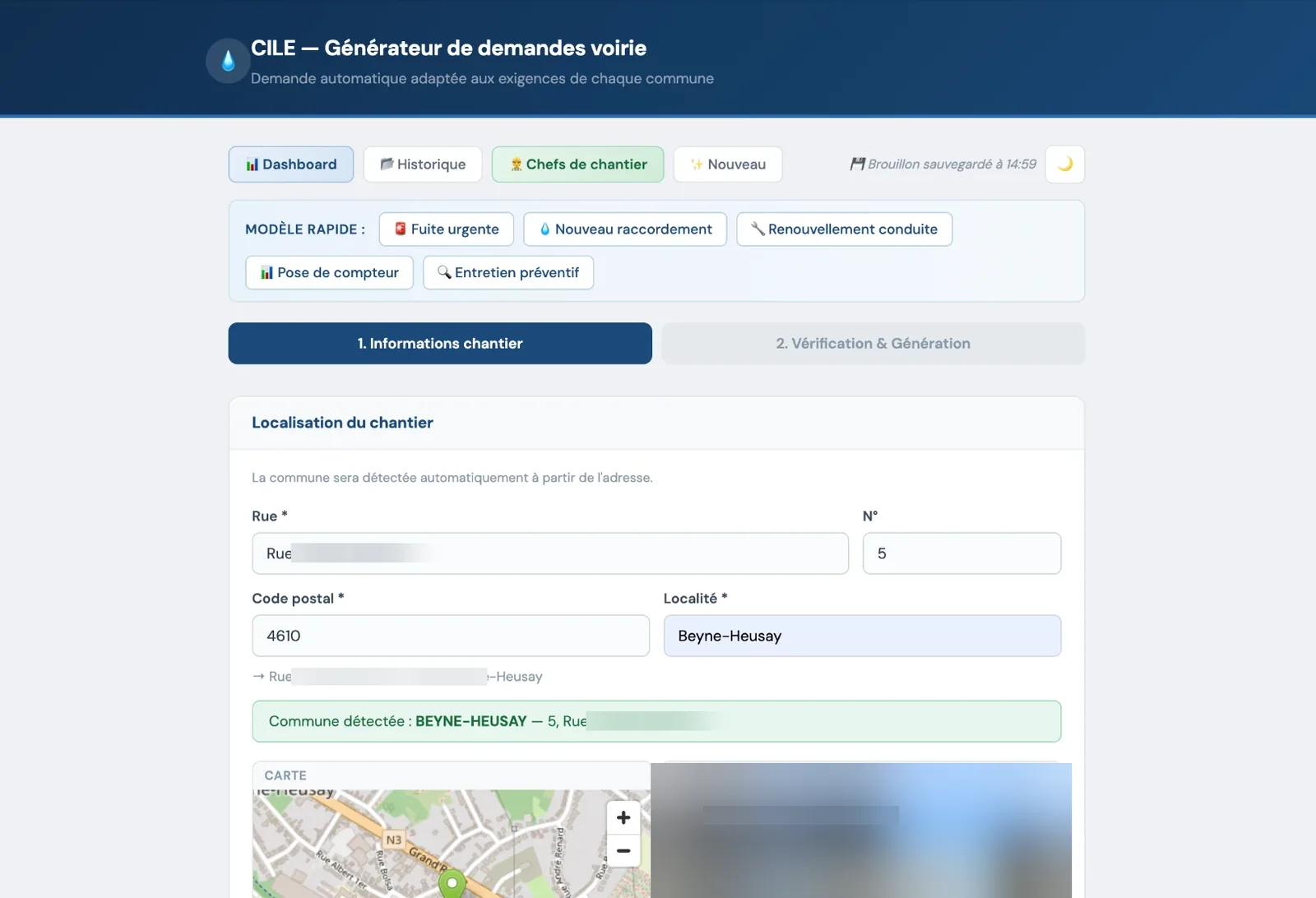
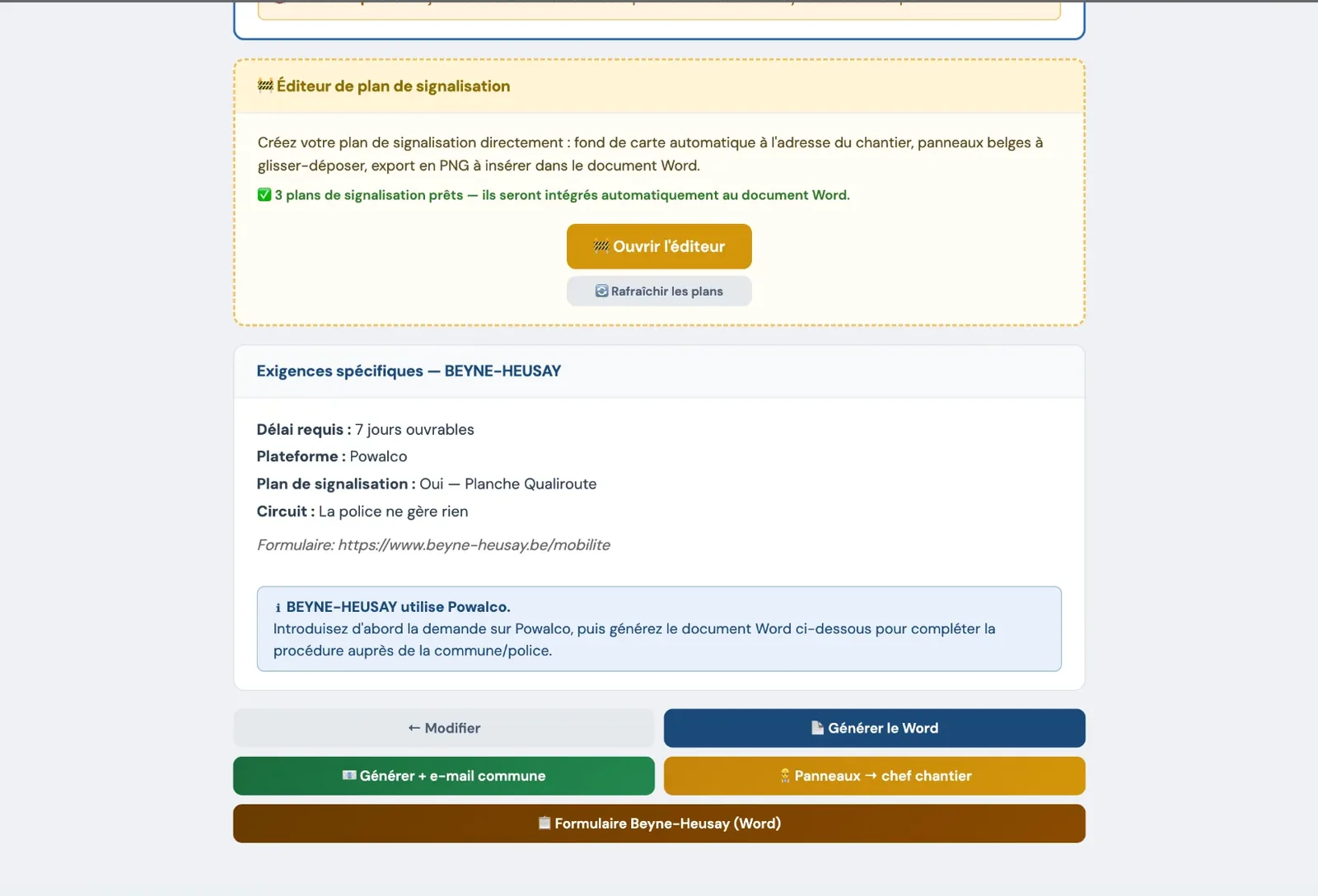
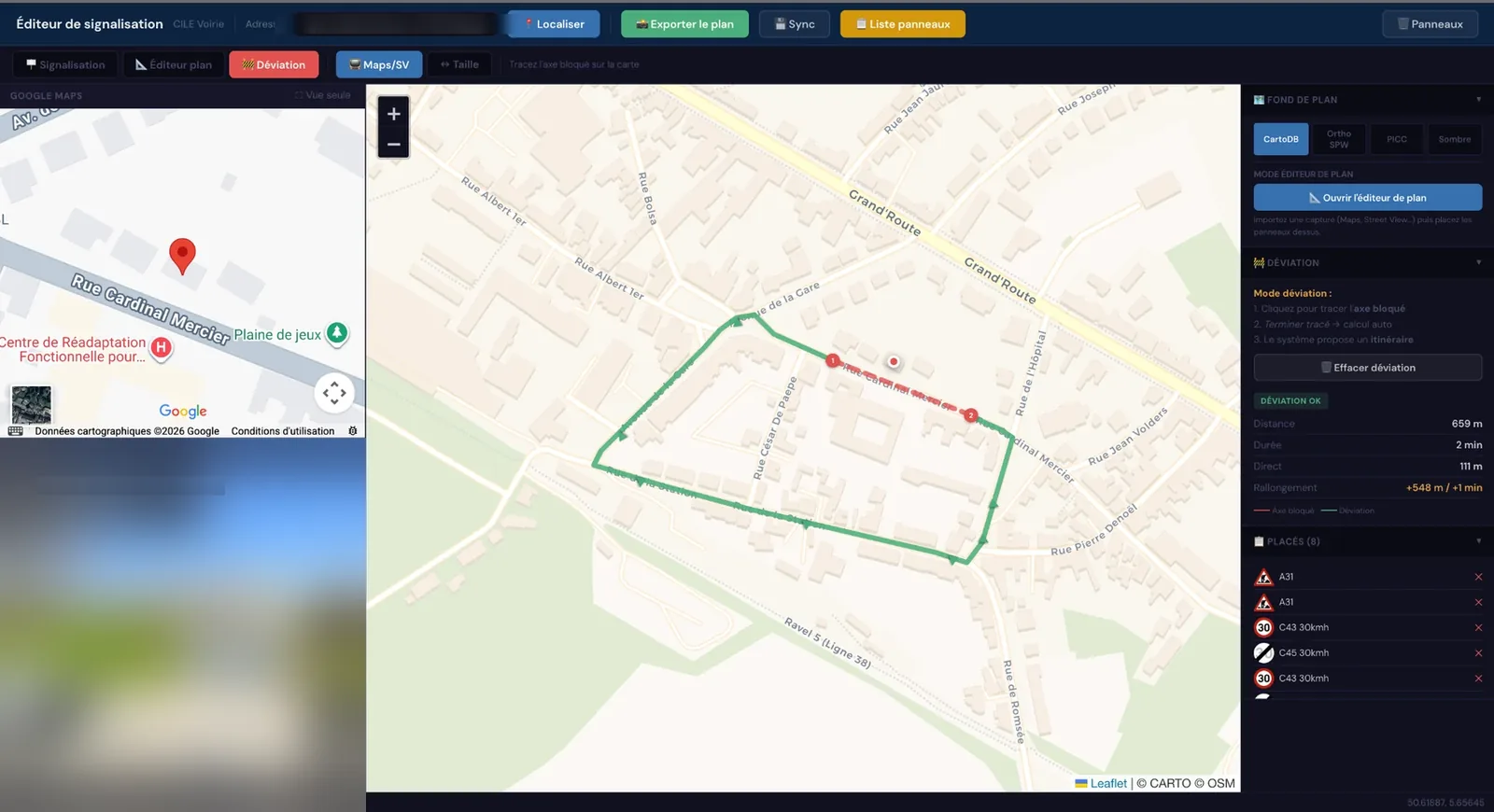
The fix was a single web tool that absorbs the complexity behind one clean interface. The employee fills out one form, regardless of where the job takes place. The tool figures out which administration applies, loads the right rules, and produces every required document and message automatically. For the signage plan, the operator designs it using a built-in visual editor on a real map. The tool handles the formatting and export.
I built it in roughly ten working days, using Claude as my build partner. I brought the domain knowledge: I researched every procedure, mapped every rule, defined what "correct" looks like. Claude turned that knowledge into working software at a speed no individual could match alone.
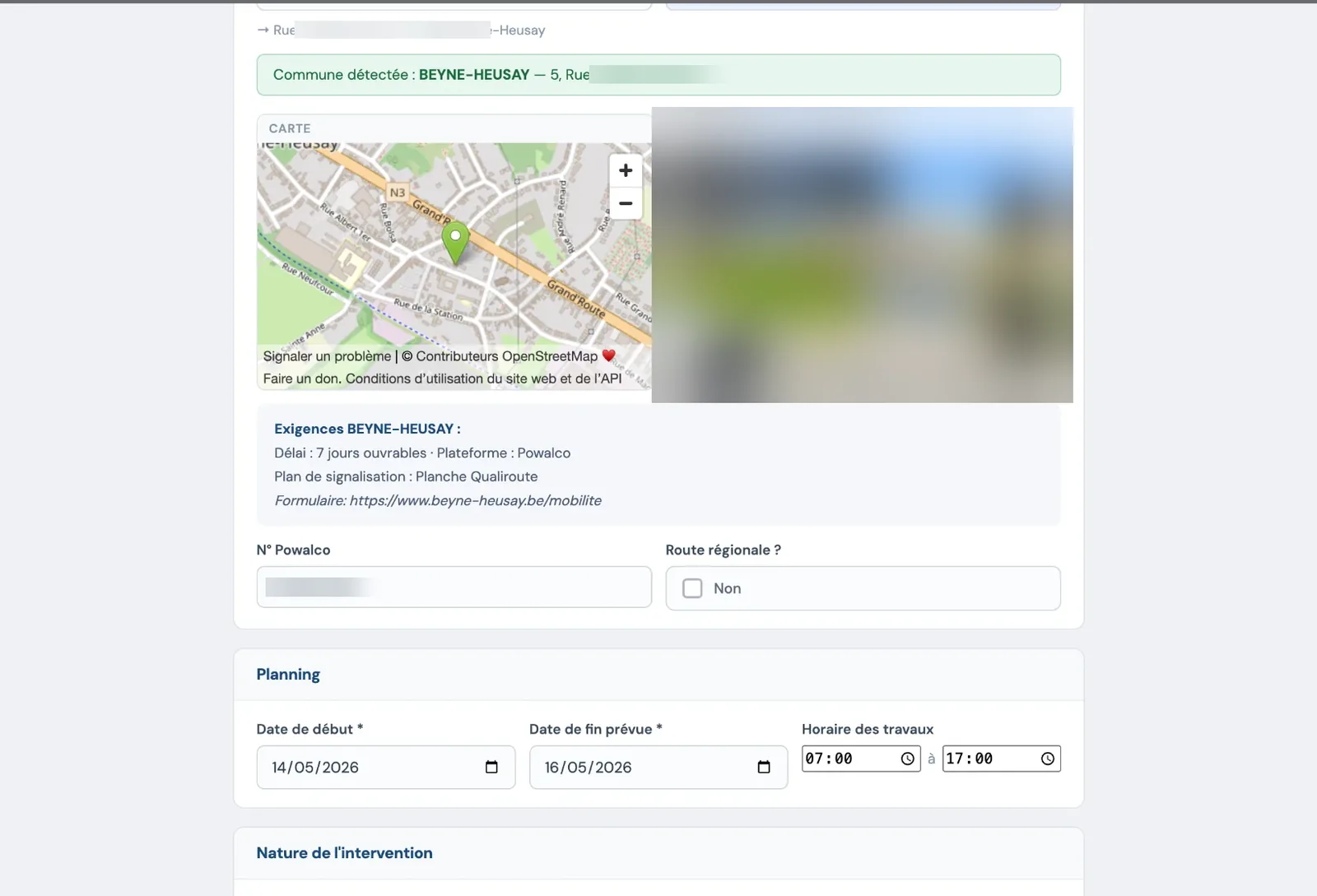
Type an address and the tool identifies the right administration. It loads the correct rules, contacts, and deadlines instantly.
Official permit documents are created automatically, formatted to each authority's exact requirements. No retyping.
A drag-and-drop editor to build compliant signage plans directly on a real map. No separate software needed.
Pre-filled messages go to the right recipients with the right attachments. Ready to send in one click.
Real-time view of activity, volumes, and trends across the territory. Exportable to a spreadsheet.
The tool runs entirely in the browser. No server, no IT setup. It works on a tablet in the field.
What used to take an employee over an hour and a half now takes eleven minutes. That gap, multiplied across every job over a ten-year horizon, is where the value lives.
That figure only captures the administrative time savings. It does not include fewer rejected applications, faster onboarding of new staff, or the fact that critical knowledge is no longer trapped in one person's head.
The tool does not replace the operator. It upgrades them.
Before, a skilled field worker spent most of their permit time buried in chaotic admin: hunting for the right form, cross-referencing contacts, reformatting the same data across three systems. The actual expertise (knowing where to place signs, understanding traffic flow, reading a site) was squeezed into a fraction of the process.
Now that same person spends their time doing what they are actually good at: designing compliant signage plans with a purpose-built visual editor, making real decisions about real roads. The tool absorbed the bureaucracy so the human could do the thinking. That is not automation replacing a person. That is a person finally working at the level they should have been working at all along.
Forget the specifics. The reason this worked is a repeatable pattern that applies to almost any organization sitting on a tedious, recurring process. Six principles generalize.
The biggest wins come from killing boring, repetitive work. Look for the task everyone dreads and nobody questions.
AI writes the code. But knowing what to build, understanding the domain, mapping the rules, maintaining the relationships: that is irreplaceably human.
When procedures live in a tool instead of someone's memory, you get a real asset: easier onboarding, fewer errors, full traceability.
"Saves time" is forgettable. "Saves €597K over ten years" gets approved. Always translate minutes into euros, conservatively.
Building is a day. Operation is years. Separate data from logic so a non-developer can maintain it without touching code.
Tools fail on adoption, not technology. Build with the team, not for them. Then measure the realized return to prove it works.
A 34-page field guide that expands this case study into a full, reusable method. It covers process assessment, value sizing, intelligent design, building with Claude, advanced prompting and token strategy, cybersecurity, adoption, deployment, and benefits realization.
Read the other publications, browse selected technical work, or download the CV from the main portfolio.
I combine strategy, engineering, and AI fluency to build tools that create measurable value inside organizations.